When Fighter Jets Cross Ancient Borders: Thailand's Air Strike and the Unraveling of Southeast Asian Stability
- iliyan kuzmanov
- Jul 24, 2025
- 16 min read
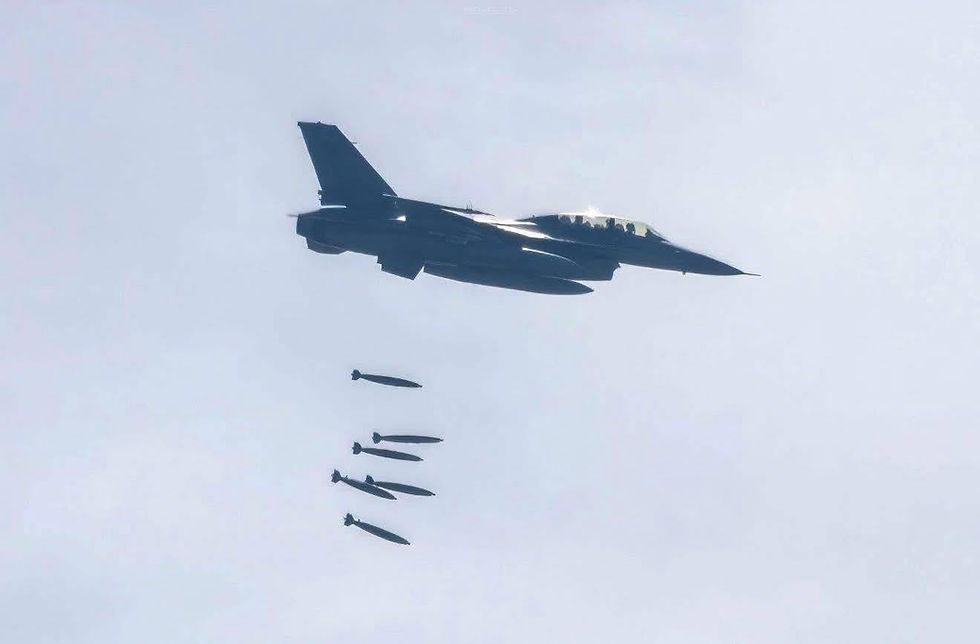
Operation "Yuttha Bodin" marks a watershed moment in Southeast Asian security dynamics. Four Royal Thai Air Force F-16s crossed into Cambodian airspace on July 24, 2025, deploying precision-guided munitions against military targets south of the Ta Muen Thom temple complex—the first cross-border air strike between ASEAN member states in the organization's 58-year history. Beyond the immediate military implications of Thailand's tactical success in neutralizing Cambodian command posts with what pilots euphemistically termed "dropping eggs," this escalation reveals profound structural weaknesses in the regional order that Western policymakers can no longer afford to ignore. Colonial-era boundary disputes have merged with domestic political crises, authoritarian consolidation, and great power competition to create a volatile cocktail that threatens not merely bilateral relations but the entire architecture of Southeast Asian stability. As China deepens its strategic penetration through Cambodia's Ream Naval Base while maintaining Thailand as its largest regional arms customer, and as American alliance relationships strain under the weight of democratic backsliding and strategic hedging, the ancient temples of the Dangrek Mountains have become ground zero for a new kind of conflict—one where precision munitions meet colonial maps, where dynastic succession intersects with fighter jet procurement, and where the ghosts of French cartographers haunt the calculations of contemporary strategists.
Cambodia's immediate denunciation of the strikes as "reckless and brutal aggression" and its urgent appeal to the UN Security Council reflects more than diplomatic posturing. Prime Minister Hun Manet's vow that Cambodia "has no choice but to respond with force against this armed invasion" signals a dangerous escalation ladder that regional institutions appear powerless to arrest. The human toll—at least 15 military fatalities, over 50 wounded, 12 civilians killed, and 40,000 displaced from 86 border villages—represents merely the visible cost of a crisis whose roots extend deep into colonial archives and whose implications reach into the highest councils of Beijing and Washington. Thailand's controversial suspension of Prime Minister Paetongtarn Shinawatra following leaked conversations with former Cambodian strongman Hun Sen has created a power vacuum that military hardliners have eagerly filled, transforming what might have been manageable bilateral tensions into an existential test of civilian control and regional order. The Royal Thai Air Force's boastful dismissal of Cambodian claims of downed aircraft as "fabrications designed to mislead the public" reflects a troubling militarization of diplomatic discourse that augurs poorly for de-escalation efforts.
The Weight of History: Colonial Cartography Meets Modern Nationalism
French colonial administrators could hardly have imagined that their boundary-making exercises of 1904-1907 would fuel military confrontations in the age of precision-guided munitions and real-time satellite surveillance. Yet the Franco-Siamese treaties, with their ambiguous references to "watershed lines" and subsequent French maps that deviated from topographical realities to favor their Cambodian protectorate, created a poisonous legacy that continues to structure contemporary conflict. The disputed territories—beyond the internationally famous Preah Vihear Temple that prompted ICJ intervention in 1962—encompass the strategically vital Emerald Triangle, the culturally significant Ta Muan temple complexes, and multiple undefined boundary segments along the 817-kilometer frontier. French surveyors, operating with nineteenth-century instruments and imperial presumptions, drew lines that placed advantageous positions on the Cambodian side despite treaty language suggesting watershed demarcation should have favored Siamese claims. These cartographic choices, preserved in colonial archives from Paris to Phnom Penh, now serve as ammunition in twenty-first-century legal battles and military planning sessions. Cambodia's July 2025 submission to the International Court of Justice regarding four additional disputed areas represents a sophisticated strategy of legal warfare, leveraging international institutions to pressure Thailand while its domestic politics remain in turmoil. The ICJ's 1962 ruling on Preah Vihear, which found Thailand bound by the principle of acquiescence after decades of apparent acceptance of French maps, established precedents that continue to shape regional calculations about the relationship between legal documentation and territorial sovereignty.
Thailand's historical grievances run deeper than mere territorial loss. The forced cession of vast territories to French Indochina—including the provinces that became modern Laos and western Cambodia—under threat of military occupation represents a foundational trauma in Thai national consciousness. School textbooks across Thailand present maps showing "lost territories" in somber shades, teaching generations that their nation's current borders represent colonial mutilation rather than natural boundaries. This educational infrastructure of grievance ensures that any Thai government perceived as weak on territorial issues faces immediate nationalist backlash, as Paetongtarn Shinawatra discovered when her deferential phone conversation with Hun Sen leaked to the public. The persistence of the Emerald Triangle dispute, despite multiple bilateral commissions and ASEAN mediation attempts, reflects how colonial boundary-making created problems that post-colonial states lack the institutional mechanisms to resolve. When French administrators drew their maps, they operated within an imperial system where metropolitan power could impose solutions; in today's anarchic international system, where sovereignty remains jealously guarded and regional organizations lack enforcement power, these inherited ambiguities become flashpoints for military confrontation. The 2008-2011 border clashes that killed 35 soldiers and displaced tens of thousands of civilians demonstrated how quickly historical grievances can escalate to artillery exchanges when political conditions align.
China's Strategic Masterstroke: From Ream to the Mekong
Beijing's transformation of Cambodia into a de facto strategic dependency represents perhaps the most successful example of China's patient approach to reshaping regional order without firing a shot. The Ream Naval Base, now featuring a 650-meter pier capable of accommodating major People's Liberation Army Navy vessels after extensive Chinese renovation, provides Beijing with critical strategic depth in Southeast Asia's maritime heart. Despite Cambodian government denials of permanent Chinese military presence, satellite imagery analyzed by Western intelligence services shows near-continuous rotation of Chinese vessels, with Type 056 corvettes maintaining presence for 359 days in 2024 alone. This development fundamentally alters regional strategic calculations, providing China with power projection capabilities that could interdict sea lines of communication crucial to global trade while maintaining plausible deniability through Cambodia's sovereign facade. The base's location—proximate to critical shipping lanes while remaining outside the immediate South China Sea dispute zone—demonstrates sophisticated strategic planning that maximizes operational flexibility while minimizing diplomatic costs. Beyond Ream, Chinese influence permeates Cambodia's military establishment through comprehensive assistance programs that have replaced aging Soviet equipment with modern Chinese systems, created dependencies in training and maintenance, and socialized a generation of Cambodian officers in PLA military academies where political loyalty receives equal emphasis with tactical competence.
China's economic penetration of both Cambodia and Thailand operates on a scale that dwarfs traditional development assistance, creating structural dependencies that constrain policy autonomy while generating genuine developmental benefits that cement popular support. The $1.7 billion Funan Techo Canal project, structured as a 50-year build-operate-transfer agreement with Chinese state enterprises, will connect Phnom Penh directly to the Gulf of Thailand, reducing Cambodia's dependence on Vietnamese ports while creating new vectors for Chinese economic influence. In Thailand, despite nominal alliance with the United States, Chinese companies dominate critical infrastructure sectors from high-speed rail to digital communications, while bilateral trade reached $135 billion in 2024, making China Thailand's largest trading partner by a considerable margin. The Belt and Road Initiative's expansion in mainland Southeast Asia represents more than infrastructure development; it constitutes a comprehensive reimagining of regional connectivity that privileges continental linkages over maritime routes, thereby reducing American leverage derived from naval supremacy. Chinese loans for these projects, while creating debt obligations, come without the governance conditionality that accompanies Western financing, making them attractive to regional elites who prioritize regime stability over democratic accountability. The sophistication of Chinese strategy lies in its multidimensional approach: military cooperation provides security guarantees, economic investment delivers tangible benefits, political support shields authoritarian practices from international criticism, and cultural diplomacy through Confucius Institutes and media partnerships shapes public discourse.
The Twilight of American Primacy: Alliance Adaptation in an Era of Strategic Competition
Washington's struggle to maintain relevance in mainland Southeast Asia reflects broader challenges in adapting a hub-and-spoke alliance system designed for Cold War containment to an era of economic interdependence and strategic hedging. Thailand's status as America's oldest Asian treaty ally, formalized in the 1954 Manila Pact and reinforced through decades of military cooperation, confronts unprecedented strain as Bangkok's military establishment finds Chinese partnership increasingly attractive. The numbers tell a stark story: American foreign military financing to Thailand totaled $25 million in 2024, a rounding error compared to the $1.3 billion in Chinese arms sales since 2014 that included submarines, tanks, and armored vehicles representing Thailand's largest defense procurement in its history. The symbolic blow of Thailand selecting Swedish Gripen fighters over American F-16s for its air force modernization—despite decades of F-16 operations and established maintenance infrastructure—signals a deliberate diversification strategy that hedges against American pressure on governance issues while maintaining nominal alliance ties. American diplomatic efforts to reinvigorate the relationship through initiatives like the Indo-Pacific Economic Framework struggle against the reality that China offers immediate, tangible benefits while American promises remain contingent on domestic political approval and bureaucratic processes that move at glacial pace compared to Chinese state-directed investment.
The deeper challenge for American strategy lies in reconciling democratic values with strategic imperatives in a region where authoritarianism appears increasingly entrenched. Cambodia's comprehensive alignment with China reflects not merely economic inducements but a fundamental regime security calculation: Beijing offers protection from Western pressure on human rights and governance while providing the economic resources necessary for patronage networks that sustain authoritarian rule. Hun Manet's ascension to prime minister, despite his West Point education that some American officials hoped would create opportunities for engagement, has reinforced rather than challenged this strategic orientation. His father Hun Sen's continued dominance as Senate President ensures policy continuity while providing a convenient scapegoat for diplomatic friction, as demonstrated by his calculated leak of Paetongtarn's phone conversation. American attempts to compete through traditional democracy promotion and civil society support face systematic obstruction, while military-to-military engagement remains constrained by congressional human rights conditions that regional militaries view as patronizing interference. The 2024 ISEAS survey showing declining American favorability across Southeast Asia, with China viewed as more influential despite trust deficits, reflects a broader regional perception that American power is waning while Chinese capabilities grow inexorably. This perception becomes self-fulfilling as regional states adjust their strategic calculations, creating cascading realignments that further erode American influence.
ASEAN's Institutional Paralysis: When Consensus Enables Conflict
The Association of Southeast Asian Nations faces an existential crisis as the Thailand-Cambodia confrontation exposes fundamental contradictions between its foundational principles and contemporary security requirements. The organization's vaunted "ASEAN Way"—emphasizing non-interference, quiet diplomacy, and consensus decision-making—evolved in an era when external threats overshadowed internal tensions and when economic development took precedence over security competition. Today's environment, characterized by militarized territorial disputes between members, competitive arms acquisition, and great power penetration, demands institutional capabilities that ASEAN's founders deliberately avoided creating. The 2008-2011 Preah Vihear crisis offered a preview of institutional inadequacy: while Thai and Cambodian forces exchanged artillery fire across disputed temple complexes, ASEAN remained paralyzed by Thailand's invocation of bilateral preference and Cambodia's resistance to regional interference. Only Indonesian leadership as ASEAN chair, deploying an unprecedented monitoring mission that stretched non-interference principles to their breaking point, prevented complete institutional irrelevance. Yet even this innovative response—placing 40 unarmed observers in conflict zones—highlighted ASEAN's fundamental weakness: lacking enforcement mechanisms, military capabilities, or even basic intelligence-sharing protocols, the organization could only bear witness to escalation rather than prevent it.
Current institutional evolution toward "enhanced interaction" and "ASEAN centrality" represents more rhetorical adaptation than substantive reform. The concept of enhanced interaction theoretically allows member states to comment on domestic developments with regional implications, but practical application remains severely constrained by consensus requirements that enable any single member to veto collective action. ASEAN's efforts to maintain centrality in regional architecture through convening powers—hosting dialogues, summits, and track-two initiatives—cannot compensate for inability to manage security crises between members. The July 2025 air strikes demonstrate this starkly: while ASEAN statements called for restraint and dialogue, Thai F-16s were already returning to base after successful mission completion. Regional diplomats, speaking privately, acknowledge that ASEAN's conflict management mechanisms remain "decorative rather than functional," designed to provide face-saving outlets for tension reduction rather than preventing or resolving militarized disputes. The organization's success in economic integration through the ASEAN Economic Community contrasts sharply with security cooperation failures, suggesting that functional cooperation remains possible only in areas where sovereignty sensitivities remain minimal. As great power competition intensifies and bilateral disputes proliferate, ASEAN risks becoming a hollow shell—maintaining elaborate institutional architecture and diplomatic protocols while actual security management occurs through bilateral great power relationships that bypass regional frameworks entirely.
Economic Interdependence as Stabilizer and Accelerant
The remarkable resilience of Thailand-Cambodia economic relations amid military tensions illustrates both the stabilizing potential and inherent limitations of commercial interdependence in preventing conflict escalation. Bilateral trade reached $3.169 billion in the first nine months of 2024, reflecting 12.4% growth despite the May border clash and subsequent political turmoil, with Thailand maintaining its position as Cambodia's fourth-largest trading partner while running a substantial $1.878 billion trade surplus. This economic relationship extends beyond formal trade statistics to encompass complex networks of cross-border labor migration, with an estimated 500,000 to one million Cambodian workers in Thailand's construction, agriculture, and service sectors sending home remittances that sustain entire villages in Cambodia's border provinces. The 17 official border crossings facilitate not merely commodity flows but deep social connections through intermarriage, cultural exchange, and small-scale trading relationships that create stakeholders in stability on both sides of the frontier. During the 2008-2011 military confrontations, most border crossings remained operational even as artillery shells flew overhead, with local commanders establishing informal ceasefires during market days to allow commerce to continue—a pragmatic recognition that economic disruption would create humanitarian crises dwarfing military casualties.
Yet economic interdependence also creates vulnerabilities that can accelerate conflict dynamics under certain conditions. Thailand's overwhelming economic advantages—its economy is roughly 25 times larger than Cambodia's—creates asymmetries that fuel resentment and nationalist mobilization. Cambodian dependency on Thai electricity imports for border provinces, Thai-controlled transportation infrastructure for regional connectivity, and Thai companies for employment and investment generates structural inequalities that populist politicians exploit. Hun Sen's calculated provocations, including the leaked phone call that contributed to Paetongtarn's downfall, demonstrate how economically weaker states can leverage political disruption to extract concessions or deflect domestic criticism. The integration of border economies also means that military escalation immediately impacts vulnerable populations dependent on cross-border trade for survival, creating humanitarian pressures that complicate strategic calculations. Business communities in both countries, particularly the Thai-Chinese chambers of commerce that dominate regional trade, consistently lobby for conflict resolution but lack sufficient political influence to override nationalist mobilization once military escalation begins. The Greater Mekong Subregion economic corridors, ASEAN Economic Community frameworks, and Regional Comprehensive Economic Partnership create multiple channels for economic engagement, but these technocratic initiatives cannot substitute for political will when territorial sovereignty and regime survival intersect with commercial interests.
The Dangerous Dance: Domestic Politics and Territorial Nationalism
Thailand's political trajectory since the May 2025 border clash illuminates how territorial disputes become weapons in domestic power struggles, creating escalatory dynamics that rational strategic calculation cannot contain. Prime Minister Paetongtarn Shinawatra's suspension by the Constitutional Court—triggered by the leaked conversation with Hun Sen that critics characterized as surrendering Thai sovereignty—represents the latest iteration of a familiar pattern where border tensions provide pretexts for military intervention in civilian politics. The Royal Thai Armed Forces' immediate assumption of operational control over border areas following her suspension, justified through National Security Council provisions that bypass civilian oversight, demonstrates how territorial disputes enable military autonomy that persists long after immediate crises subside. Military sources, speaking through carefully orchestrated leaks to sympathetic media outlets, suggest that coup planning accelerated after the successful F-16 strikes demonstrated military competence while civilian leadership appeared compromised by the Hun Sen scandal. This pattern—border tensions enabling military intervention against Shinawatra-affiliated governments—repeated itself in 2006 and 2014, suggesting institutional learning by military elites who understand how to manipulate nationalist sentiment for political advantage.
Cambodia's authoritarian system generates different but equally dangerous dynamics where territorial assertiveness serves regime consolidation needs. Hun Manet's formal assumption of the prime ministership represents dynastic succession rather than political transition, with his father Hun Sen maintaining control through the Senate presidency while cultivating an image as defender of Khmer territorial integrity. The calculated decision to leak Paetongtarn's phone conversation—timed precisely when Thai domestic tensions peaked—demonstrates sophisticated understanding of Thai political vulnerabilities and willingness to exploit them for strategic advantage. Hun Sen's Facebook posts, reaching over 14 million followers, systematically invoke historical grievances about Thai aggression while portraying the ruling Cambodian People's Party as the sole guardian of territorial sovereignty. These social media campaigns, amplified through state-controlled traditional media and coordinated bot networks, create public expectations for forceful responses that constrain diplomatic flexibility. The May 2025 clash generated massive rallies in Phnom Penh where government-organized demonstrators demanded military retaliation, creating political capital for increased defense spending and expanded Chinese military cooperation while deflecting attention from economic challenges and governance failures. Educational curricula in both countries systematically reinforce territorial nationalism through maps showing maximum historical extent, heroic narratives of resistance to foreign encroachment, and vilification of neighbors as perpetual threats requiring eternal vigilance.
Arms Racing in the Shadow of Great Powers
Southeast Asia's military modernization acceleration reflects complex motivations where bilateral tensions intersect with great power competition to create potentially destabilizing dynamics. Regional defense spending reached $50.6 billion collectively in 2024, representing a doubling over fifteen years that outpaces economic growth and occurs despite absence of conventional interstate warfare since the 1979 Sino-Vietnamese conflict. Thailand's 2025 defense budget of $5.55 billion includes controversial procurements that signal strategic hedging: selecting Swedish Gripen fighters over American F-16s despite higher costs and integration challenges, purchasing Chinese submarines while maintaining American naval cooperation, and developing indigenous defense production capabilities through technology transfer requirements that exceed 150% offset obligations. Cambodia's more modest capabilities mask dramatic qualitative improvements enabled by comprehensive Chinese assistance, including the May 2025 unveiling of QW-3 surface-to-air missile systems and TH-S311 integrated command networks that provide sophisticated anti-access capabilities previously unavailable to Phnom Penh. These acquisitions reflect regional emphasis on asymmetric capabilities designed to complicate intervention scenarios rather than achieve conventional military superiority—submarines and anti-ship missiles to threaten maritime operations, advanced air defense systems to contest aerial supremacy, and cyber capabilities to target critical infrastructure.
The regional arms dynamic exhibits characteristics of action-reaction cycles driven more by external threat perceptions than bilateral rivalries. China's grey zone operations in the South China Sea, featuring Coast Guard vessels that maintained presence at strategic features for over 350 days in 2024, create shared threat perceptions that drive capability development even among states with minimal maritime claims. American security assistance, constrained by congressional human rights conditions and bureaucratic delays, cannot compete with Chinese willingness to provide immediate capability upgrades without political conditions. Russian arms sales, despite sanctions pressure, continue through third-party arrangements that provide alternatives to Western systems while maintaining strategic autonomy. The proliferation of precision strike capabilities, demonstrated by Thailand's successful deployment of guided munitions against Cambodian targets, lowers barriers to limited military operations that could escalate beyond political control. Military modernization occurs alongside institutional weaknesses in civilian oversight, intelligence sharing, and crisis management that increase risks of inadvertent escalation through technical accidents or unauthorized actions. Defense industrial cooperation, promoted as economic development initiatives, creates constituencies for continued military spending while technological offsets enable indigenous production of increasingly sophisticated systems that escape traditional arms control frameworks.
Implications for Western Strategy: Beyond Great Power Competition
Western policymakers observing the Thailand-Cambodia crisis must recognize that Southeast Asian dynamics transcend simple great power competition narratives that dominate Washington strategic discourse. The region's states pursue sophisticated strategies of omni-directional engagement that maximize autonomy while extracting benefits from all partners, defying Cold War-era alignment expectations that continue to shape American strategic planning. Thailand's careful cultivation of its American alliance while deepening Chinese military and economic ties represents not confusion but careful calculation about relative power trajectories and regime security requirements. Cambodia's comprehensive Chinese alignment reflects similar strategic logic adapted to different circumstances—lacking Thailand's economic weight and institutional depth, Phnom Penh sees Beijing partnership as essential for regime survival while maintaining sufficient diplomatic flexibility to engage other partners in non-sensitive areas. These strategies succeed because regional states understand their geographic centrality and economic dynamism provide leverage that neither Washington nor Beijing can ignore, creating bidding dynamics that enhance regional autonomy even as strategic competition intensifies.
The immediate challenge for Western policy involves preventing the current crisis from establishing precedents that normalize military force in territorial disputes while recognizing limited leverage over states that increasingly see Western democracy promotion as threatening rather than supportive. Traditional tools—military assistance conditioned on human rights improvements, democracy support through civil society, economic sanctions targeting authoritarian elites—face diminishing returns as Chinese alternatives provide immediate benefits without political conditions. More promising approaches might emphasize capability building in areas where Western technological advantages remain decisive: maritime domain awareness systems that enhance transparency, cyber defense capabilities that protect critical infrastructure, and intelligence sharing arrangements that build trust through concrete security benefits. Economic engagement through initiatives that compete with rather than criticize Chinese investment could provide alternatives that enhance regional autonomy—the Partnership for Global Infrastructure represents a start, but implementation remains glacial compared to BRI project delivery. Diplomatic strategies should abandon futile attempts to force regional states into alignment choices, instead emphasizing issue-specific cooperation that respects strategic hedging while building habits of cooperation that could prove decisive in future crises.
Conclusion: Managing Multipolarity in Mainland Southeast Asia
Operation "Yuttha Bodin" represents more than a bilateral military confrontation over colonial-era boundaries—it signals the emergence of a new Southeast Asian security environment where traditional conflict management mechanisms prove inadequate for contemporary challenges. The successful Thai air strikes demonstrate how precision military capabilities, nationalist domestic politics, and great power competition can combine to shatter longstanding taboos against interstate military force within ASEAN. As China consolidates strategic positions through Cambodia while maintaining comprehensive partnerships with Thailand, and as American influence wanes despite formal alliance relationships, the region enters uncharted territory where neither bipolar competition nor multilateral institutions provide reliable security frameworks. The human costs—thousands displaced, dozens killed, economies disrupted—pale compared to potential consequences if military escalation becomes normalized as a tool for territorial assertion or domestic political mobilization.
Managing this emerging multipolarity requires abandoning comfortable assumptions about economic interdependence preventing conflict or institutional dialogue resolving disputes. The Thailand-Cambodia case demonstrates that economic ties create vulnerabilities as much as stabilizing interdependencies, while ASEAN's institutional paralysis reflects structural limitations rather than temporary leadership failures. Western strategies must adapt to regional realities where authoritarian consolidation appears durable, Chinese influence grows through patient investment rather than coercion, and territorial nationalism provides more powerful political mobilization than democratic ideals. This demands pragmatic engagement that prioritizes stability over transformation, building issue-specific cooperation while accepting that comprehensive alignment remains impossible in an era of strategic hedging. The alternative—continued reliance on outdated frameworks while regional states develop independent military capabilities and deepen authoritarian practices—risks transforming Southeast Asia from a zone of relative peace into an arena for proxy competition where local conflicts provide kindling for broader conflagrations. The ghosts of French colonial cartographers still haunt the Dangrek Mountains, but their contemporary manifestation through precision-guided munitions and great power rivalry demands new approaches that recognize Southeast Asian agency while managing inevitable friction between regional autonomy and global strategic competition.
References:
Army Recognition 2024, 'Cambodian Navy develops Ream Naval Base amid growing Chinese influence', Army Recognition, 15 November, viewed 24 July 2025, https://armyrecognition.com/news/army-news/2024/cambodian-navy-develops-ream-naval-base-amid-growing-chinese-influence.
Aviation Week Network 2025, 'U.S.-Thai Military Alliance Is At A Crossroads', Aviation Week & Space Technology, 12 March, viewed 24 July 2025, https://aviationweek.com/defense/budget-policy-operations/us-thai-military-alliance-crossroads.
Brookings Institution 2025, 'Economics is security: Building US strategy in Southeast Asia', Policy Brief, The Brookings Institution, Washington DC, February.
Center for Strategic and International Studies 2024, 'Crossroads of Competition: China in Southeast Asia and the Pacific Islands', CSIS Asia Program Report, CSIS, Washington DC, December.
Council on Foreign Relations 2025, 'Is a Coup Coming Soon in Thailand?', CFR Expert Brief, CFR, New York, 15 June.
East Asia Forum 2024, 'Democracy remains a waiting game under Cambodia's Hun Manet', East Asia Forum Quarterly, vol. 16, no. 1, pp. 23-31.
Foreign Policy 2025, 'No Winners in Thailand-Cambodia Border Dispute', Foreign Policy, 1 July, viewed 24 July 2025, https://foreignpolicy.com/2025/07/01/thailand-prime-minister-suspended-cambodia-border-hun-sen/.
FULCRUM 2024, 'Thailand's Defence Budget in 2024-2025: Appeasing the Military?', ISEAS Perspective, no. 2024/87, ISEAS-Yusof Ishak Institute, Singapore.
Hong Kong Free Press 2025, 'From warships to robot battle dogs: Cambodia, China begin largest-ever military drills', Hong Kong Free Press, 14 May, viewed 24 July 2025.
International Court of Justice 1962, Temple of Preah Vihear (Cambodia v. Thailand), Judgment of 15 June 1962, ICJ Reports 1962, p. 6.
Jones, L 2012, 'ASEAN and the Principle of Non-Interference', E-International Relations, 8 February, viewed 24 July 2025, https://www.e-ir.info/2012/02/08/asean-and-the-principle-of-non-interference/.
Khaosod English 2025, 'Thailand Announces Gripen Purchase to Replace Aging F-16 Fleet by 2028', Khaosod English, 4 June, viewed 24 July 2025.
Lowy Institute 2024, 'Partnership of convenience: Ream Naval Base and the Cambodia-China convergence', Lowy Institute Analysis, Lowy Institute, Sydney, November.
Modern Diplomacy 2025, 'Thai-Cambodia Border Conflict and Colonial Legacies', Modern Diplomacy, 8 June, viewed 24 July 2025.
Nation Thailand 2025, 'Cambodia submits border dispute with Thailand to ICJ', The Nation Thailand, 23 July, viewed 24 July 2025.
Storey, I 2025, 'Southeast Asia's Arms Race', Asia Sentinel, 22 February, viewed 24 July 2025, https://www.asiasentinel.com/p/southeast-asia-arms-race.
The Asia Live 2025, 'U.S. Ally and China's Strategic Partner Exchange Fire in Southeast Asia', The Asia Live, 2 June, viewed 24 July 2025.
The Diplomat 2025, 'Cambodian Soldier Killed in Clash With Thai Army Along Disputed Border', The Diplomat, 28 May, viewed 24 July 2025.
United States Institute of Peace 2023, 'In Southeast Asia, U.S.-China Competition Is More than a Two-Player Game', Special Report no. 523, USIP, Washington DC, September.
Weatherbee, DE 2019, ASEAN's Way of Conflict Management: Active and Effective Role, Institute of Southeast Asian Studies, Singapore.



Comments